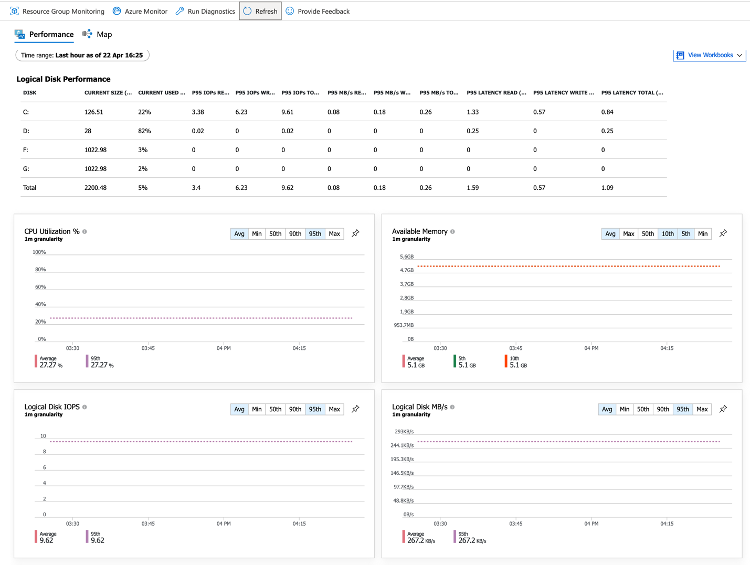
The path most DBAs take to troubleshoot query performance is to first identify the problematic query (typically the query consuming the highest amount of system resources), and then retrieve that query’s execution plan. There are two scenarios. One is that the query consistently performs poorly. Consistent poor performance can be caused by a few different problems, including hardware resource constraints (though this situation typically will not affect a single query running in isolation), a suboptimal query structure, database compatibility settings, missing indexes, or poor choice of plan by the query optimizer. The second scenario is that the query performs well for some executions, but not others. This problem can be caused by a few other factors, the most common being data skew in a parameterized query that has an efficient plan for some executions, and a poor one for other executions. The other common factors in inconsistent query performance are blocking, where a query is waiting on another query to complete in order to gain access to a table, or hardware contention.
Suboptimal query constructs
Relational databases perform best when executing set-based operations. Set-based operations perform data manipulation (INSERT, UPDATE, DELETE, and SELECT) in sets, where work is done on a set of values and produces either a single value or a result set. The alternative to set-based operations is to perform row-based work, using a cursor or a while loop. This type of processing is known as row-based processing, and its cost increases linearly with the number of rows impacted. That linear scale is problematic as data volumes grow for an application.
While detecting suboptimal use of row-based operations with cursors or WHILE loops is important, there are other SQL Server anti-patterns that you should be able to recognize. Table-valued functions (TVF), particularly multi-statement table-valued functions, caused problematic execution plan patterns prior to SQL Server 2017. Many developers like to use multi-statement table valued functions because they can execute multiple queries within a single function and aggregate the results into a single table. However, anyone writing T-SQL code needs to be aware of the possible performance penalties for using TVFs.
SQL Server has two types of table-valued functions, inline and multi-statement. If you use an inline TVF, the database engine treats it just like a view. Multi-statement TVFs are treated just like another table when processing a query. Because TVFs are dynamic and as such, SQL Server does not have statistics on them, it used a fixed row count when estimating the query plan cost. A fixed count can be fine, if the number of rows is small, however if the TVF returns thousands or millions of rows, the execution plan could be very inefficient.
Another anti-pattern has been the use of scalar functions, which have similar estimation and execution problems. Microsoft has made a lot of headway on improving the performance of the aforementioned patterns with the introduction of Intelligent Query Processing in SQL Server 2017 and Azure SQL Database, under compatibility levels 140 and 150.
https://docs.microsoft.com/en-us/azure/virtual-machines/troubleshooting/allocation-failure