
A tester runs a network scan and receives the following output:
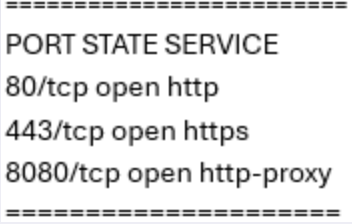
Subsequent testing reveals that port 8080 hosts an administrative interface not intended for external access. What should be the tester’s next logical analysis step?
The latest changes and updates from the administration for this exam.
Latest Update: Jun 15 2026
All questions are working fine.
A tester runs a network scan and receives the following output:
Subsequent testing reveals that port 8080 hosts an administrative interface not intended for external access. What should be the tester’s next logical analysis step?
During a cloud penetration test, an attacker gains access to a compromised account within an organization’s cloud environment. To avoid detection and complicate incident response, the attacker leverages cross-account permissions to transfer exfiltrated data to an external cloud account under their control. Which of the following best describes how cross-account resources are used in this scenario?
During an internal penetration test, Ben is tasked with evaluating how the organization’s firewalls and intrusion detection systems (IDS) handle malformed TCP flags, fragmented packets, and unusual header combinations. He develops custom-crafted network packets with modified source ports, sequence numbers, and flag settings to determine whether security controls properly detect or block anomalous traffic. Which technique is Ben primarily performing?
You are drafting the technical constraints for an upcoming penetration test. Which of the following would be a correct example of a technical constraint in a scoping document?
Which attack method is MOST likely to be used by a malicious employee or insider trying to obtain another user's passwords?
Bill has finished creating a low-level diagram of the target network and has identified several weak points. However, the diagram is complex, and he struggles to determine which vulnerability to exploit first. What should Bill do next to most effectively prioritize his attack?
During an internal assessment, an attacker sends a convincing email to employees posing as the company’s IT department and requests that they “verify” their credentials through a provided link. Several employees comply and voluntarily submit their usernames and passwords, which are unknowingly harvested by the attacker. Which type of attack is being performed?
During an internal assessment, you perform a host discovery scan across a Dynamic Host Configuration Protocol (DHCP)-enabled subnet and export the discovered Internet Protocol (IP) addresses. Then, to validate coverage, you write a Bash script that sends a single Internet Control Message Protocol (ICMP) echo request to each host and logs responses. At this point, several systems known to be online, including laptops and servers with host-based firewalls, do not appear in your log. What is the MOST appropriate next troubleshooting step to improve validation accuracy?
A consulting firm is responding to a Request for Proposal (RFP) to conduct a penetration test for a defense contractor. Which of the following items should the firm NOT include in its proposal to demonstrate trustworthiness?
During an internal penetration test, you temporarily modified perimeter firewall rules to permit inbound access over several non-standard TCP ports in order to validate segmentation controls and simulate external attacker behavior. The engagement has now concluded, and production traffic is scheduled to resume normal monitoring baselines. Which action should be taken to ensure the security posture of the firewall is properly re-established?